
I always like to include real-life events in my blogs, and this week just such a case presented itself. I trained in cardiology in London, at the Heart Hospital and Bart’s (both now amalgamated on one site). I have fond memories of my training, and got a ‘blast from the past’ email this week from one of my former colleagues, a genetic nurse counsellor. Genetic nurse counsellors do what they say on the tin – they are involved with the care of patients and their families with inherited conditions, often with a nursing background, and provide counselling. This takes many forms, for example, taking a detailed family history (called a pedigree), describing the process whereby a patient has a gene test and going through the results (which can be incredibly complicated!). However it sadly not infrequently means meeting with families who have tragically lost someone, and often this is a young person due to the nature of inherited cardiac conditions.
I run the inherited cardiac conditions service for Dorset, which I find a fascinating subject. It’s rather varied, with a high number of rare conditions, and often the patients are very young – late teens or early 20s, which does sometimes make a change from the ‘average’ heart patient (I would estimate the average age in my heart failure clinic to be early 80s).
The email from my colleague was to find some information on the relative of a patient from London who had tragically died. When a person has an unexpected cardiac death out of the blue, in an ideal world they have a post mortem. In an even more ideal world, that post mortem tissue is analysed by a specialist cardiac pathologist. I wonder whether the lay person view is that all autopsies are like CSI, but unfortunately it’s simply not possible often to be that forensic. There simply aren’t enough specialist pathologists around. In this case however, there was, and the conclusion was that the heart was macroscopically (meaning when viewed with the naked eye) and microscopically (viewed under the microscope) normal. Further testing was also normal.
How can it be that an otherwise well young person could suddenly drop dead?
The answer is often something we call ‘sudden arrhythmic death syndrome’ or SADS. Arrhythmia is the term doctors use to describe an abnormal heart rhythm, and there are many different types ranging from the entirely benign to fatal. Thankfully it is rare, with about 500 cases per year in the UK. However it is responsible for about a quarter of cardiac deaths in young people.
Please check out my video on the heart rhythm on the website for more information, but essentially as electricity travels through the heart it causes it to contract, and afterwards, it relaxes again. This is all controlled by the flow of certain ions (chemicals) across cells. Sometimes, genetic abnormalities cause problems with the proteins that control movement of these ions, and that can result in particular ‘electrical diseases of the heart’, or ‘channelopathies’ as we call them. Even if a person has a channelopathy, the chances of dying are very small, but we risk assess patients to see if they would benefit from a device such as a defibrillator, or medication. I have included an example of an ECG showing a channelopathy here:
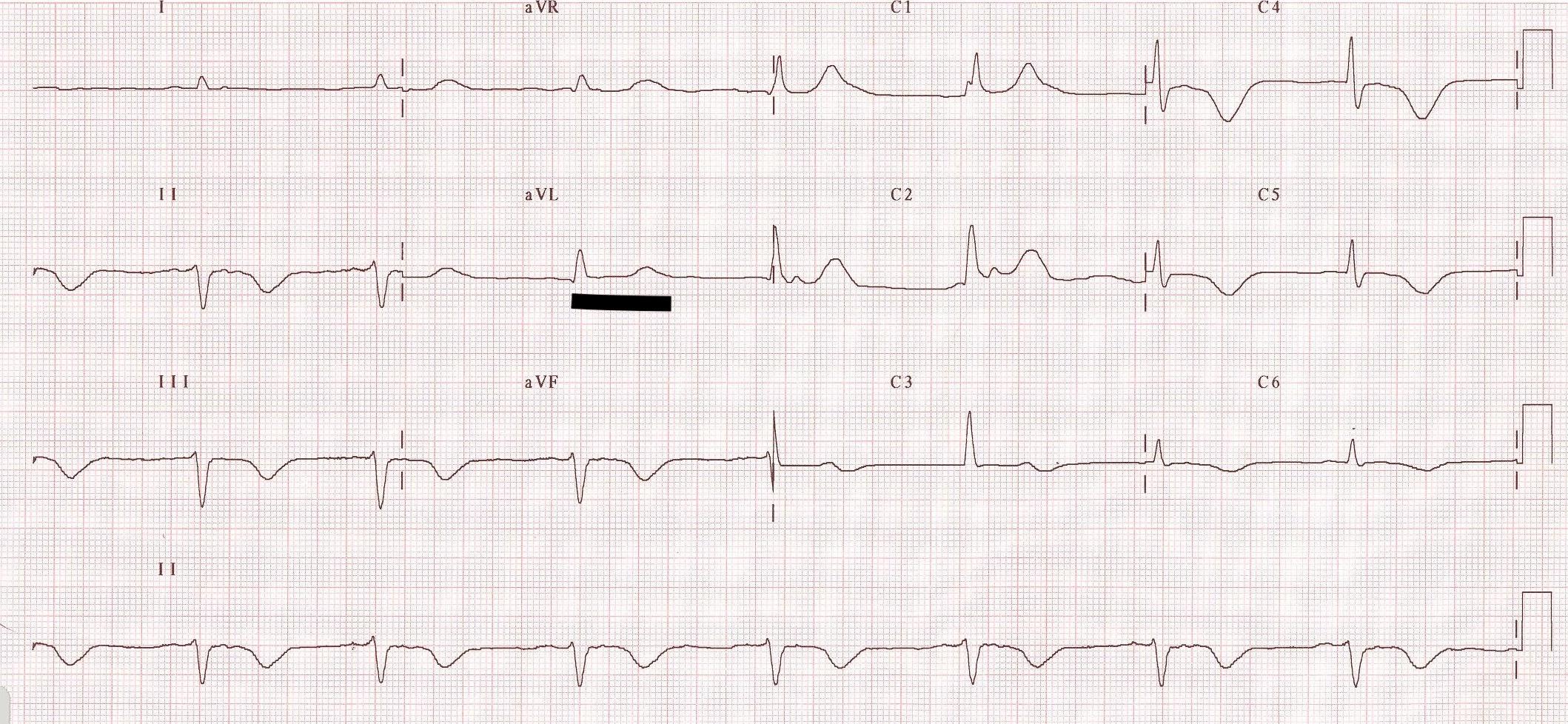
The black bar highlights an increased length of time that the heart is taking for the ions to reset (we call this repolarisation) and this ECG shows a condition called Long QT syndrome. In the case above, the genetic nurse counsellor will now be tracing relatives of the deceased to offer heart screening. What a tough job that is.
Raising awareness of these conditions is important. I hope you never have to come across it, but I also hope this has provided an interesting an useful read regardless!