
Quick answer: Atrial fibrillation raises stroke risk because an area of the heart called the left atrial appendage can allow blood clots to form. Blood thinners are the usual protection, but for patients who can’t tolerate the bleeding risk — or in unusual cases like this one — a left atrial appendage occlusion device can “plug the gap” instead.
After nearly 25 years as a doctor, for the most part, the actual medicine is the easy bit of my job. I’ve been around long enough to see most things in my speciality, and so I particularly enjoy seeing patients where things aren’t as clear cut. Patients in whom there are different strategies to consider, and explaining complex medical information in a way that is understandable and digestible is both a privilege and rewarding. So it was this week.
Perhaps one of the most feared medical issues is a disabling stroke? Having a function of your body suddenly and irrevocably removed would be dreadful. Thankfully many patients make excellent recoveries from strokes, particularly now a procedure called mechanical thrombectomy (where a blood clot in the brain is literally sucked out) which restores blood flow quickly to the affected area of the brain is now more widespread.
Nevertheless, it’s why as a cardiologist, I almost always err on the side of caution when it comes to prioritising reducing a person’s stroke risk over the risk of bleeding. What do I mean by that? Well, very often heart conditions come with a risk of stroke, as the risk factors for one are risk factors for the other.
Why AF increases stroke risk
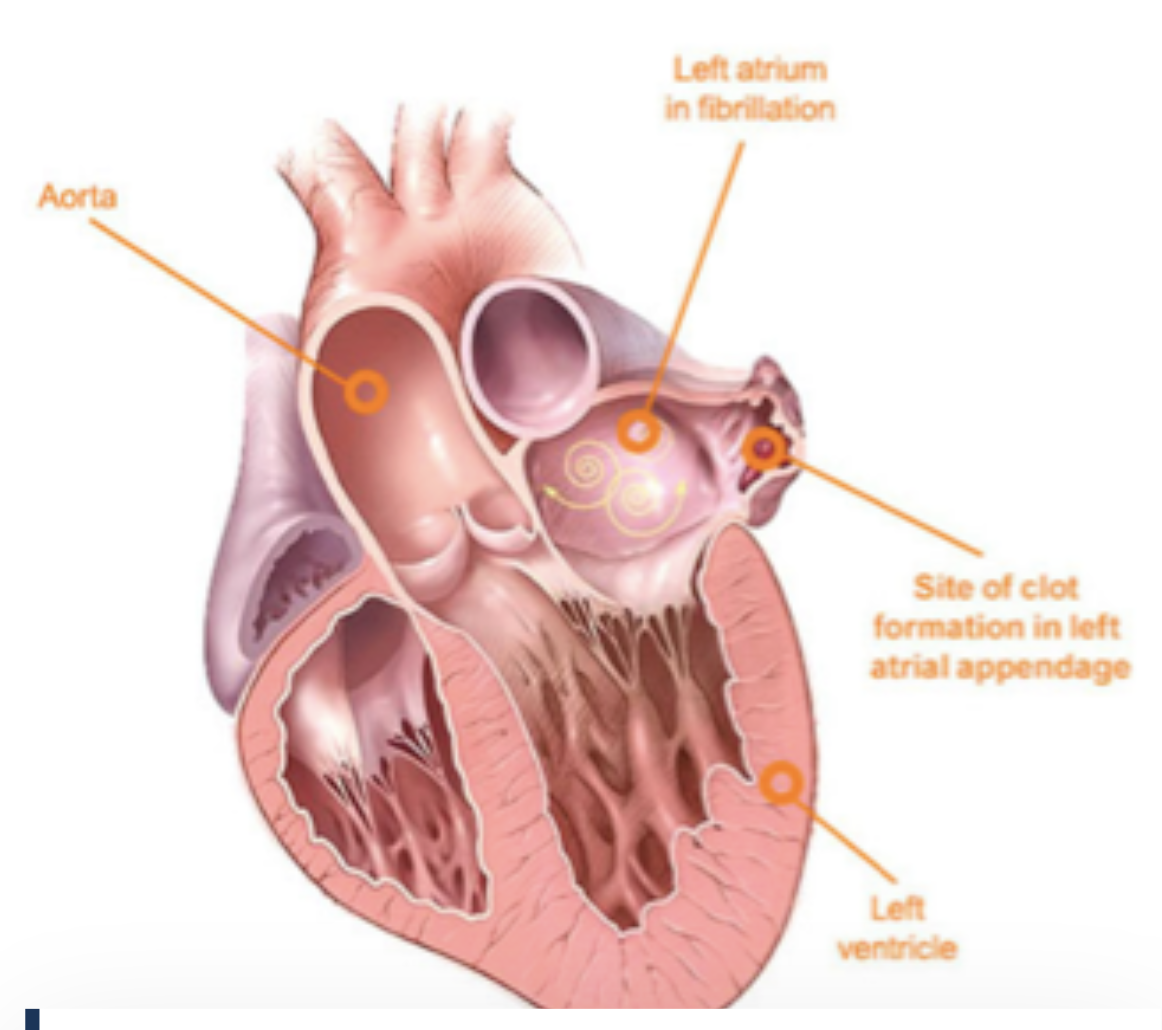
A good example of this is atrial fibrillation, the commonest heart rhythm abnormality. In AF, the top chambers (called atria) of the heart fibrillate, which means they don’t contract in a nice regular fashion, instead ‘quivering’. This can reduce the overall efficiency of the heart as a pump (although many patients don’t notice that). With respect to stroke risk however, there is a problem.
On the side of the atria, there is a small muscular pouch called the left atrial appendage. It has a role in regulating blood volume in the body by secreting chemicals into the blood stream. Fun fact – the chemicals, called ‘atrial natriuretic peptides’ are from the same family as ‘brain natriuretic peptides’ or BNP for short which we measure in the blood to check for heart failure).
However, useful as that is function is, the anatomical location of the appendage means that if the atria is fibrillating and not effectively clearing the appendage, it potentially allows time for a clot to form and cause a stroke. The diagram below illustrates this.
Most commonly patients having a stroke present with sudden onset arm, leg or face weakness, issues with speech or understanding, or a mixture of all of those things.
An unusual case
My patient, fit and well, in fact, very fit and well, suddenly had a seizure. He had paroxysmal AF (comes and goes), but had no symptoms at all, and it was only an apple watch that let him know he was in it. Initial tests suggested a bleed on the brain, which is of course a potential downside of the blood thinners we use to reduce stroke risk in patients with AF. His neurologist suggested a follow-up MRI scan, which now the dust has settled actually looks more like an initial stroke with a bleed happening subsequently.
This is very rare indeed. Firstly, a stroke from AF in a patient on a blood thinner happens very rarely (assuming they are taking their tablets as prescribed which this man was. Secondly a blood going from the heart to the brain and causing a seizure with no other stroke symptoms is very rare too.
What to do next?
What can be done about it?
This is one of those situations where careful discussion with patients is all-important, recognising that sometimes in medicine we don’t have large clinical trials to back up decisions, and ‘expert opinion’ is the best we have (although we do pool our expertise in multi-disciplinary meetings).
The plan here, is to consider a left atrial appendage occlusion device. These ‘umbrella-like’ devices are inserted in a keyhole surgery technique through a vein in the leg, and effectively ‘plug the gap’ in the appendage where clots can occur. Please see the illustration.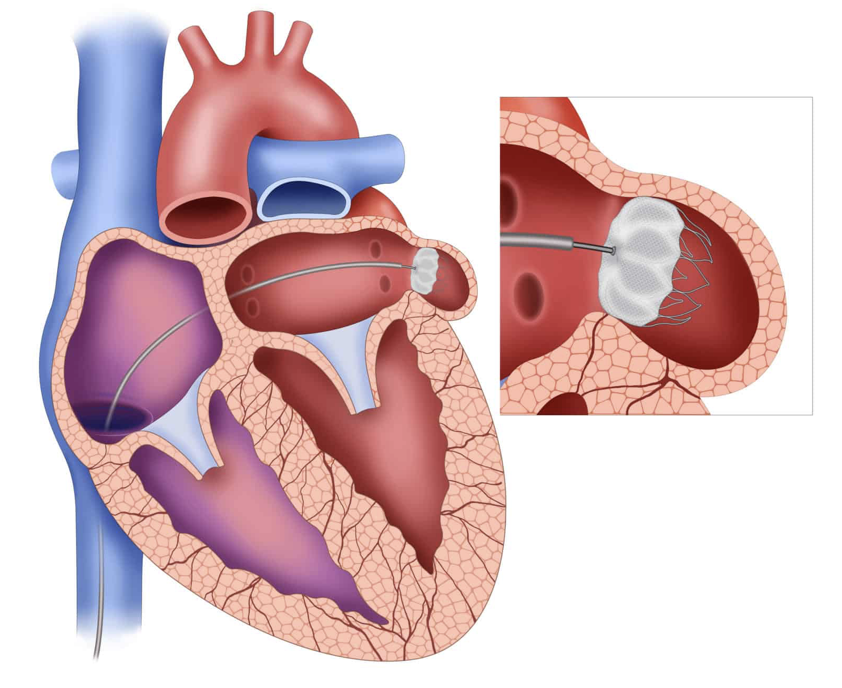
They were originally designed for patients who cannot take blood-thinners because of bleeding risk, and in fact those are the only such patients before now I have sent for them (for example – someone with gastro-intestinal bleeding). To my knowledge there are no large trials in patients such as mine, but it seems a very reasonable strategy in the circumstances. Thankfully he has no significant after effects of the seizure, but we need to make sure the most-feared disabling stroke risk is minimised moving forwards.
In this week’s research video, I discuss a small but interesting trial on beetroot juice and blood pressure. With that in mind, I’ll leave you with a simple but incredibly delicious recipe I recently discovered: take a whole, unpeeled raw beetroot. Wash. Coat in olive oil (extra virgin if you are able). Season with salt (I know!) and pepper. Wrap in a double layer of foil, and place on a bbq (either on the grate or in the coals – adjust time accordingly). I tend to go on the grate for around an hour. Unwrap, and drizzle with balsamic vinegar. Slice, and enjoy!