
Quick answer: A Holter (ambulatory ECG) monitor records your heart’s rhythm continuously, sometimes for weeks at a time, and is most often used to investigate palpitations or dizzy spells. Very occasionally it captures something dramatic — in this real case, a frail patient’s cardiac arrest at a care home, showing the exact moment his heart rhythm turned fatal, then flatlined, then picked up again once staff began CPR. It’s a rare but striking illustration of what these small wearable monitors can reveal.
Happy Mother’s Day! Obviously today is rather sad for me in that regard, as it’s the first in my memory that I haven’t spoken with my Mum as she is now in a dementia care home. I won’t labour that, but hope Mums everywhere have a great day that they deserve.
With most medical tests, whether it’s an x-ray, a CT, or some other scan, the majority of results that come back are reassuringly normal. This makes sense when you think about it. If every test came back with a problem the health service couldn’t cope with the amount of work, and clearly not everyone who seeks a medical opinion ends up with a medical diagnosis. If I consider my working week, a significant portion of it is looking through test results and advising patients accordingly.
Every now and then, a result comes in which is so abnormal it demands urgent attention, and I saw one last week which was just that.
What is a Holter monitor, and why is it used?
One of the key diagnostic tests I use is an ambulatory ECG monitor, also known as a holter monitor. Older style monitors have a number of leads dangling from a patient’s chest, but the newer ones are sticky patches about the size of a mobile phone, which are much more convenient for a patient to wear. I’ve had one myself to test them out, and did a really sweaty bike ride with no issues, the signal was good and it didn’t come off. The commonest reason to do one is for patients with palpitations, or dizzy spells, to see what the underlying cause might be. They can be worn from anywhere between a day to several weeks.
These days wearables like an Apple watch are pretty good also, but at least in 2025 aren’t sufficiently advanced to differentiate between many of the possible heart rhythm abnormalities. I’m sure in time that will change!
What happened in this patient’s case?
Last week I saw a holter monitor which I’ve probably only seen once in the last 20 years. An elderly man had been having dizzy spells, and a monitor was fitted. He was rather frail, so much so that when he had the monitor fitted he was actually in a convalescent home after a spell in hospital. The first image below shows something highly abnormal. Each spike is a heart-beat, with time on the x-axis moving left to right, and you will notice the tracing suddenly becomes highly abnormal.
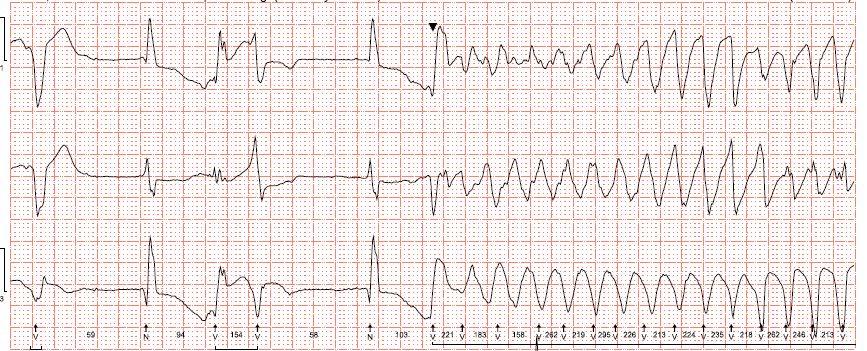
This ventricular arrhythmia can be fatal.
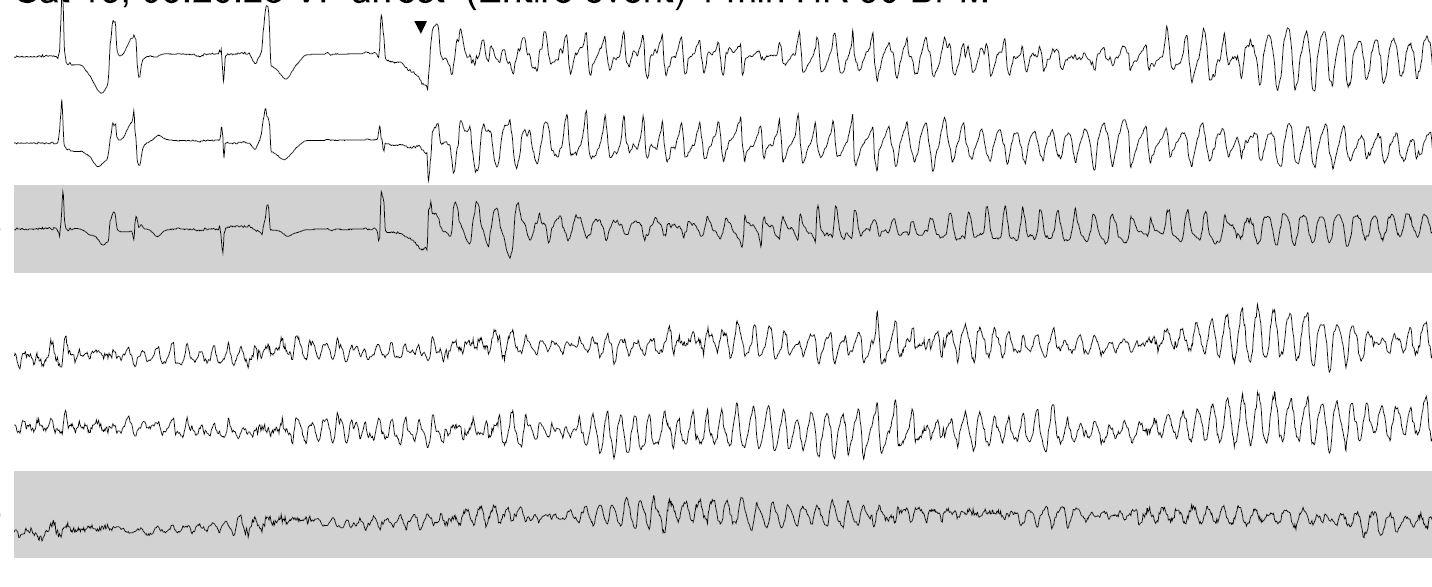
The next image shows an even faster and more chaotic heart rhythm, and this is almost always fatal.
In the third image, the line starts off flat, meaning there is no heart-beat. This poor man is in the rapid process of dying. However you will then see a slower, more regular ECG tracing. This is what an ECG looks like during cardio-pulmonary resuscitation. The care home staff had witnessed this man having a cardiac arrest, and had begun CPR. Delivery of CPR produces a measurable electrical signal, seen here on his ECG monitor. Amazing.
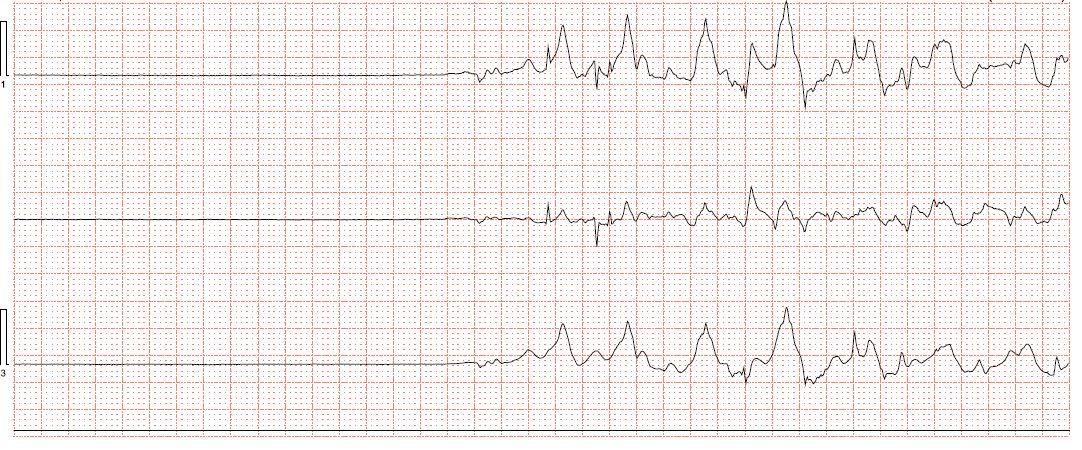
I do see this relatively often in patients being monitored within a hospital environment (for example on the coronary care unit, but the chances of capturing a fatal ventricular heart rhythm whilst a patient is wearing an ECG monitor in the community are tiny! We perform thousands of such monitors each year in hospital, yet I’ve only seen this once before.
In this week’s video, I discuss a trial on enlargement of the aorta – the main artery in your body, which is of particular relevance to me as I have a family history of it.
My office is closed this week as I’m off skiing. I’m really looking forward to a break, although skiing is usually a pretty full-on week as I do like to maximise my time on the slopes! Thankfully it looks like there’s still plenty of snow, so provided we all come back in one piece, I’ll be a happy man.