
Last week, I wrote about palpitations, and the sorts of questions a Cardiologist will ask to try and determine the cause. This week, I will cover how we investigate palpitations with medical tests, before moving on next week to discuss the different heart rhythm issues specifically.
The commonest test is an electrocardiogram, or ECG. This is a simple, non-invasive test where sticky electrodes are placed on the chest wall, and the electrical signals are recorded. It gives a ‘snapshot’ of the heart rhythm at the time, but also gives certain clues as to the structure of the heart. It can, for example, show signs of previous heart attacks.
I have put my own ECG here:
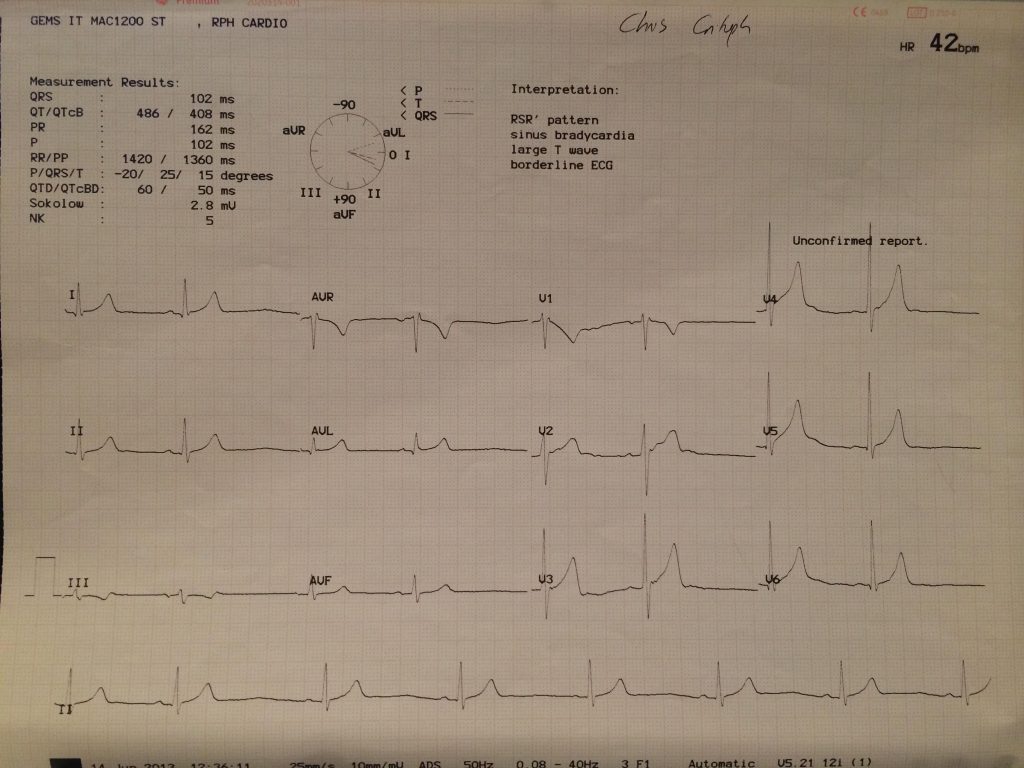
You will notice my heart was going pretty slowly, only 42 beats per minute. I’m really fit now, but when this was taken several years ago I was really really fit. You may notice also the computer tries to interpret it, and calls it ‘borderline’! I actually did go on and have an echocardiogram (ultrasound) of my heart after this, just to be on the safe side!
The ECG also shows us how the electrical signal flows from the top to the bottom of the heart. If it is performed during symptoms of palpitations, it can help diagnose the cause, but of course that is unlikely.
We therefore often use ECG monitors which patients wear for periods of between a day or 2, to up to 2 weeks. These have evolved over time, and many modern monitors now simply have a sticky patch on the chest instead of lots of wires.
Another useful option are wearables such as smart watches. People often wear these for long period, so can be very useful to catch symptoms when out and about. Here is an example from my own watch:
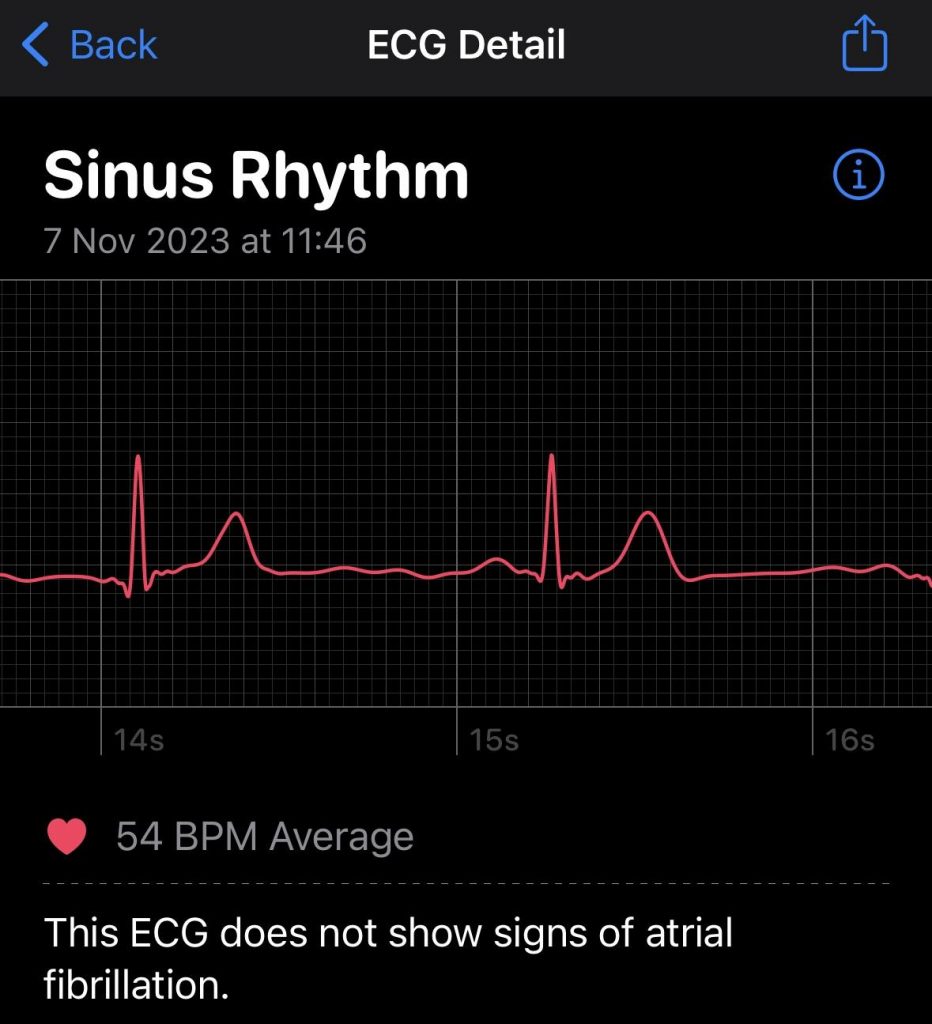
The quality of the reading here is pretty good, but that’s not always the case. Nevertheless, having automatic features such as AF detection is really smart.
Lastly, implantable loop recorders are devices which can be implanted under the skin, with a battery life of up to 2-3 years. Putting them in only takes a minute or two under local anaesthetic. They have software which allows them to detect certain heart rhythm abnormalities, and let their doctor know over the internet. Patient can also activate them themselves if they have symptoms, for example using an app on a phone. Here is a picture of such a device:
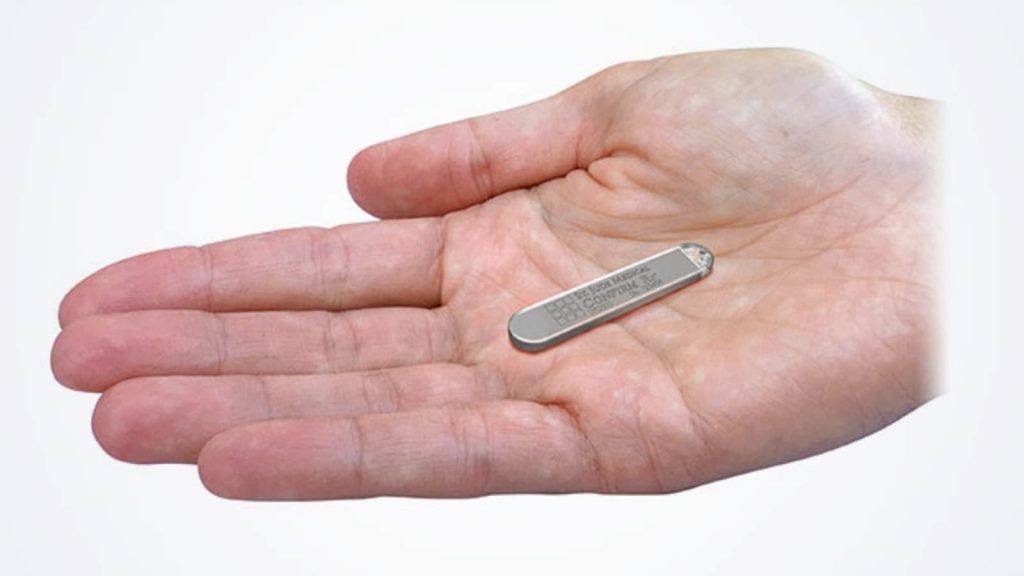
These devices are really useful for very infrequent, severe symptoms, particularly if someone has passed out, as of course they would not be conscious to activate a smart watch or other heart recorder.
It is also important to check some routine blood tests such as kidney, liver, and thyroid function. If symptoms appear during exertion, sometimes I would suggest we exercise a patient on a treadmill whilst wearing a heart rhythm monitor. Lastly, it is common to perform an echocardiogram of the heart to check it is structurally normal, particularly if there are any abnormalities on the ECG.
Now you have an idea of the investigations for palpitations, and next week I will dive deeper into the causes themselves.
Best Wishes
Chris
This blog is for general informational purposes only. It does not constitute the practice of medicine including the giving of medical advice. No doctor patient relationship is formed. The use of this information is at the user’s own risk. The content is not intended to be a substitute for professional medical advice, diagnosis or treatment. Readers should not disregard or delay obtaining medical advice for any medical condition they have and should seek the advice of their healthcare professionals for any such conditions.