
Quick answer: Takotsubo cardiomyopathy (“broken heart syndrome”) is a stress-triggered condition where the heart’s tip temporarily balloons and stops squeezing properly, closely mimicking a heart attack on first presentation — but the coronary arteries are normal, and most people make a full recovery within a couple of months.
We all know that stress can impact symptoms in the body, but I want to tell you about a case I saw of extreme stress causing heart failure.
What happened in this case?
This particular condition crops up in the media from time to time. In this lady’s case, she had been having a rather large argument with someone (which seemed most out of character; I hadn’t met her before but she seemed very calm and balanced). Whatever it was about though had clearly really upset her. Fairly shortly after the argument ended, she developed chest pain and noticed she was rather breathless. This was quite out of the blue, as she was otherwise a pretty fit and well lady in her 70s. Getting worried, she called for medical help, and wound up in hospital.
Her ECG (paper tracing of the heart) looked suspicious for a heart attack, and so she was whisked into the catheter lab. Here she had an angiogram, where a small tube called a catheter is passed up the artery in the arm into the heart, and dye injected. This dye lights up the coronary arteries, and in her case showed them to be smooth and unobstructed.
Not a heart attack then.
So what was going on?
What is takotsubo cardiomyopathy?
The ultrasound of the heart (echocardiogram) gave away the diagnosis. The apex (tip) of the heart had ballooned out and wasn’t squeezing properly. This is characteristic of a condition called takotsubo cardiomyopathy, but you may have heard of it by its colloquial name of broken heart syndrome, or stress cardiomyopathy (cardio = heart, myopathy = muscle not working properly).
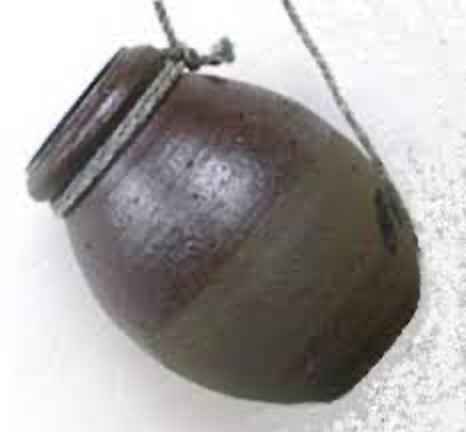
This is a Takotsubo, or Japanese fishing pot used to catch octopus. It looks remarkably similar to how the heart looks when affected by this condition. The term ‘broken heart syndrome’ was coined because it can affect people with severe stress responses, for example to grief. I have seen several people over the years develop this at funerals, but the stressor isn’t always so severe – I have seen two people get this at the dentists!
Why does it happen?
We don’t know exactly why it occurs, but is thought to be something to do with abnormal functioning of adrenaline hormone receptors on the heart. However it is thought the intense stress hormone release at the time of the trigger for some reason cause the receptors on the surface of the heart to behave abnormally and reduce the pumping function. These receptors are more abundant at the apex of the heart, hence the odd shape that it becomes.
The condition is more common in post-menopausal women, perhaps because oestrogen is protective to the heart. It is also thought inflammation has a role, and perhaps abnormal functioning of the very small arteries within the heart, called the micro-circulation.
What’s the outlook?
Despite such a dramatic presentation, fortunately the prognosis is usually very good with most patients making a full recovery within a couple of months on the heart medication. It can recur, but thankfully that is pretty rare, about 1-2% of cases.
Stress of course is very common, and everyone is likely to experience fairly severe stress in their lives from time to time. We don’t know why very occasionally it results in takotsubo cardiomyopathy. Although it is a rare condition overall, we see at least one case per month in our hospital (please bear in mind hundreds of patients are seen each month with chest pain!).
Eileen Porter
says:This I found very interesting as a few weeks after my daughter died I developed severe chest pain and ended up in hospital. Although I have sincedevelopes many cardiacissues over the years that was the worst pain I have ever had. Thank goodness.admittedly this was 40+ years ago but I still compare chest pain with that episode.now at least I know what it was. Thanks Eileen.